Talking It Out: How Indonesia's Question-and-Answer Classroom Culture Builds Smarter Students
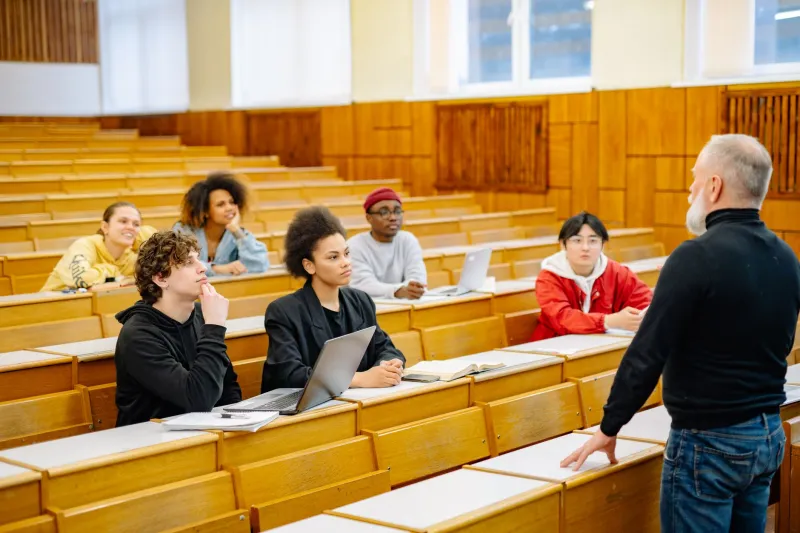
Picture a typical high school class in the US. The teacher stands at the front. Slides click by. Students take notes — or pretend to. By the end of the period, maybe three kids asked a question. Everyone else stayed quiet and hoped the information would stick.
Now picture the opposite: a room where students fire questions at each other, debate the steps to a solution, and nobody gets to just sit there passively. That's closer to what soal jawab looks like in Indonesian education — and it's a big part of why this site is named after it.
Soal jawab literally translates to "questions and answers," but in practice it means something richer than a simple Q&A. It's a culture of dialogue where understanding is built through conversation, not handed down from a lectern. And the science behind why it works is pretty hard to argue with.
Silence Isn't the Same as Learning
Here's a misconception a lot of students carry around: if you're sitting quietly and absorbing information, you're learning. But cognitive science keeps poking holes in that idea.
Research on passive versus active learning consistently shows that students retain far more when they're required to do something with information — explain it, question it, argue about it. A widely cited study out of the University of Washington found that students in traditional lecture-based classes were 1.5 times more likely to fail than those in active learning environments. That's not a small gap.
When you're just listening, your brain can drift. You might be physically present in the room while mentally composing a grocery list. But the moment someone asks you a direct question — or you're expected to respond to a peer's reasoning — your brain shifts into a higher gear. You have to retrieve information, evaluate it, and communicate it clearly. That's three cognitive processes firing at once instead of one.
What 'Soal Jawab' Actually Looks Like in Practice
In Indonesian schools, particularly at the secondary and university level, soal jawab sessions are built into the learning rhythm. A teacher might pose a problem, but rather than immediately solving it, the class is expected to wrestle with it together. Students ask clarifying questions. They challenge each other's reasoning. They work toward an answer collaboratively.
This isn't just casual chit-chat about homework. It's structured dialogue with a purpose. The teacher guides the conversation but doesn't dominate it. The goal is for students to surface their own confusion, fill in each other's gaps, and arrive at understanding through the process of talking it through.
The name of this site — Soal Jawab — reflects exactly that spirit. Learning isn't about receiving answers. It's about asking better questions and building answers together.
Why American Classrooms Are Leaving Gains on the Table
American education has made strides with collaborative learning models, but lecture-heavy instruction is still the default in a lot of schools, especially as students move into high school and college. There's a cultural piece to this too: many students have been trained to equate silence with respect and talking with disruption.
But here's the thing — staying quiet in class often means staying confused in private. Students who don't vocalize their questions during class are the same ones who hit a wall at 11pm the night before an exam.
Engagement research backs this up. According to data from the National Survey of Student Engagement, students who frequently participated in class discussions reported significantly higher levels of deep learning and critical thinking development compared to those who rarely spoke up. It sounds obvious when you say it out loud, but the classroom design in many schools doesn't actually make space for that participation.
The Peer Dialogue Advantage
One of the most underrated elements of the soal jawab model is that a lot of the dialogue happens between students, not just between student and teacher.
When a peer explains something to you, it often lands differently than when a teacher does. Your classmate is closer to your level of understanding — they remember what it felt like to not get it. They use different language. They make different analogies. And research on peer-assisted learning supports this: students explaining concepts to each other tend to deepen their own understanding in the process, not just help the person they're explaining to.
This is sometimes called the "protégé effect" — the act of teaching something forces you to organize your knowledge more clearly and identify the spots where your own understanding is shaky.
Practical Ways to Build Your Own 'Soal Jawab' Practice
You don't need to overhaul your entire school to bring this approach into your study life. Here are some concrete ways to make it work:
1. Study in dialogue, not in silence. Instead of reviewing notes alone, grab a classmate and take turns explaining concepts to each other. When one person finishes explaining, the other asks at least two follow-up questions. This forces both of you to go deeper than surface-level review.
2. Turn your notes into questions. After class, rewrite your key points as questions rather than statements. Instead of writing "photosynthesis converts light to energy," write "What exactly is being converted during photosynthesis, and what conditions affect that process?" This primes your brain for active recall instead of passive re-reading.
3. Use the "explain it back" rule in study groups. Make a group norm: nobody moves on to the next topic until everyone can explain the current one in their own words. If someone can't, that's the group's cue to slow down and dig in — not skip ahead.
4. Ask questions out loud, even uncomfortable ones. One of the biggest barriers to classroom dialogue in American schools is the fear of looking dumb. But here's the reframe: asking a question in class is one of the highest-value things you can do with that time. If you're confused, there's a solid chance several other people are too — you're just the one brave enough to say it.
5. Debrief after every study session. Spend five minutes at the end of any group study session asking: "What's still unclear? What question would I ask if there were a quiz right now?" This habit surfaces lingering confusion before it snowballs into exam-week panic.
The Bigger Takeaway
The soal jawab tradition isn't just a teaching technique — it's a mindset. It treats learning as something that happens between people, not just inside individual heads. It says that confusion is worth voicing, that questions are a sign of engagement, and that the back-and-forth of dialogue is where real understanding gets built.
American students have access to incredible resources, technology, and opportunities. But the one thing that's often missing is the permission — and the practice — of talking their way to understanding.
So next time you're in class and you're lost, say something. Ask the question. Start the conversation. That's not a distraction from learning. That's what learning actually looks like.