Your Brain Doesn't Want to Do the Homework — So Give It Just Five Minutes
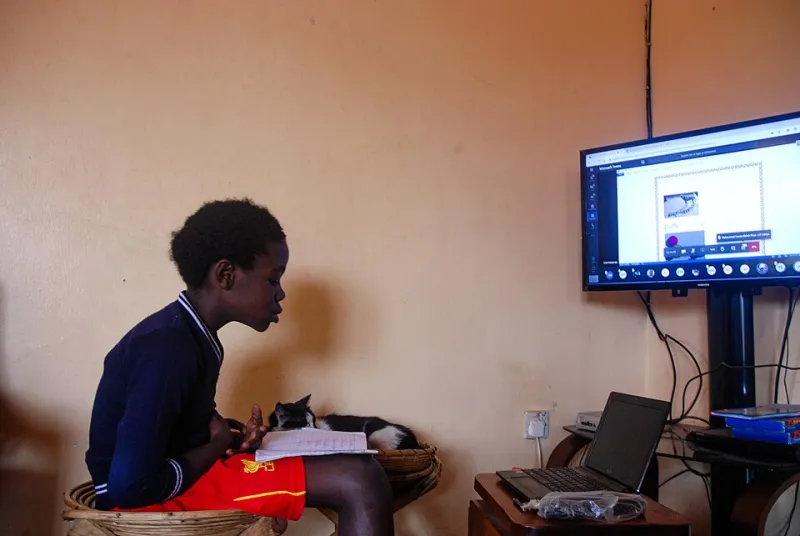
Photo: Vanmulondo, CC BY-SA 4.0, via Wikimedia Commons
It's 8 p.m. on a Sunday. The math worksheet is open on your laptop, the textbook is somewhere under a hoodie, and you've somehow ended up watching a video about a guy who builds cabins in the Alaskan wilderness. Sound familiar?
Every student in every time zone — from a high schooler in Ohio to a tutoring student in Jakarta — knows this exact moment. And here's the thing: the problem usually isn't the homework itself. It's the starting.
Why the First Five Minutes Feel Impossible
Psychologists who study procrastination have landed on a pretty consistent finding: we avoid tasks because of how we predict they'll feel, not because of the tasks themselves. Your brain looks at a 90-minute problem set and forecasts an evening of frustration. So it nudges you toward the cabin video instead.
Tutors and study coaches — including many working with students across Indonesia, where after-school tutoring is a huge part of academic culture — have a workaround that sounds almost too simple: commit to five minutes. Just five. Then you're allowed to stop.
It works because of a principle called task initiation. Once you've actually begun, two things happen:
- The dread was worse than the reality. That first problem is rarely as painful as your brain forecast.
- Momentum kicks in. Psychologists call it the Zeigarnik effect — unfinished tasks nag at your brain. Once a problem set is open and half-started, your mind wants closure.
Motivation, it turns out, doesn't come before action. It comes from it. You don't wait to feel like doing homework; you do five minutes of homework and then feel like continuing.
The Five-Minute Rule, Step by Step
Here's the full version, and you can run it tonight with literally any subject:
Step 1: Shrink the entry point. Don't tell yourself "do the essay." Tell yourself "open the document and write one bad thesis statement." The task should be so small it feels almost insulting.
Step 2: Set a real timer. Not a mental note — an actual timer on your phone for five minutes. The physicality matters. It turns a vague intention into a bounded experiment.
Step 3: Work badly on purpose. For five minutes, give yourself permission to do it poorly. Messy notes, wrong first steps, whatever. Perfectionism is procrastination wearing a nicer outfit.
Step 4: Check in when the timer rings. Now you get to choose: stop (that's a legitimate option!) or keep going. In practice, most students keep going — because starting was the hard part, and they've already done it.
Step 5: If you stop, stop without guilt. Five real minutes beats zero imaginary hours. You've still moved the ball, and tomorrow's start will be easier because there's already something on the page.
Why Momentum Beats Motivation
There's a reason tutors love this technique: it reframes the whole battle. Students who procrastinate often think they have a motivation problem — "I just can't get myself to care." But motivation is a fickle, mood-based thing. Momentum is mechanical.
Think of it like pushing a car. The first shove is the hardest because you're fighting static friction. Once the wheels are turning, keeping it rolling takes way less effort. Homework works the same way: problem one costs enormous energy; problem four costs a fraction of that.
A Few Upgrades That Make It Stick
- Pair it with a launch ritual. Same desk, same playlist, same water bottle. Your brain learns that this setup means "we start now," and the resistance drops over time.
- Do it out loud. Saying "okay, five minutes, just the vocab sheet" to a parent, sibling, or roommate adds a tiny bit of accountability — and it's weirdly effective.
- Use it for the boring stuff too. Five minutes of organizing your notes or making a flashcard deck counts. Small starts compound.
Try It Tonight
Pick the assignment you've been dodging the longest. Set a timer for five minutes. Start badly. When it rings, decide honestly whether to continue.
Worst case? You did five minutes more than you would have. Best case? You look up and it's 9:40, the worksheet is done, and the cabin guy can wait until tomorrow.